

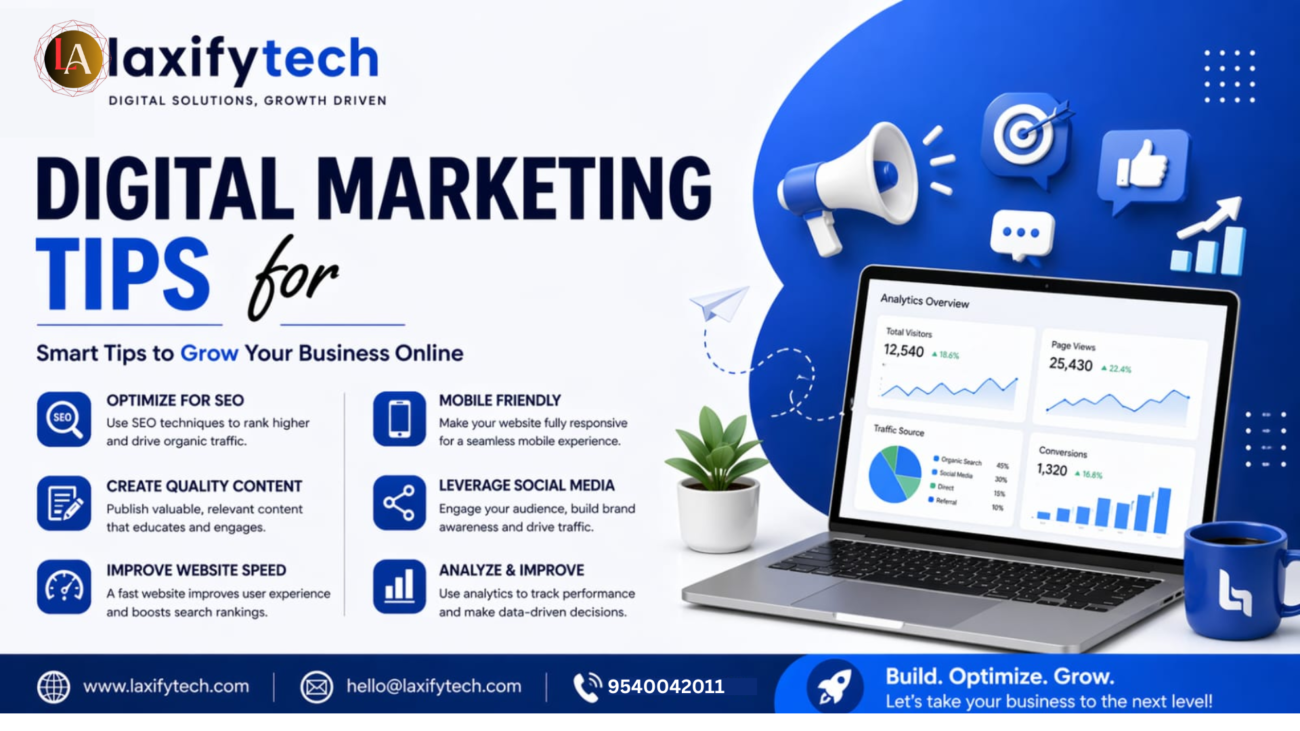
In today’s competitive digital landscape, having a strong online presence is no longer optional—it’s essential. Businesses of all sizes are leveraging digital marketing strategies to reach their target audience, build brand awareness, and drive consistent growth. The image highlights key digital marketing tips that can significantly improve your business performance online. Let’s explore these strategies in detail and understand how they can help your brand grow effectively.
Importance of Search Engine Optimization (SEO):
Digital marketing begins with a well-structured strategy, and one of the most important elements of that strategy is search engine optimization (SEO). Optimizing your website for SEO ensures that your business appears in search engine results when potential customers are looking for products or services similar to yours. SEO involves keyword research, on-page optimization, technical improvements, and quality backlink building. Moreover by focusing on SEO, businesses can increase organic traffic, improve visibility, and build long-term credibility in their niche.
Power of High-Quality Content:
Another crucial aspect of digital marketing is creating high-quality content. Content is the backbone of any successful online marketing campaign. Whether it’s blog posts, social media updates, videos, or infographics, valuable and relevant content helps attract and engage your audience. Good content not only informs but also builds trust with your audience. Therefore when people find your content helpful, they are more likely to return, share it with others, and eventually become loyal customers.
Website Speed and Performance Optimization:
Website speed and performance also play a significant role in digital success. A slow-loading website can drive visitors away and negatively impact your search engine rankings. Users expect fast and seamless experiences when browsing online. Improving website speed by optimizing images, reducing unnecessary scripts, and using reliable hosting can enhance user experience and boost engagement. Finally, a faster website leads to higher retention rates and better conversion outcomes.
Mobile-Friendly Website Design:
In today’s mobile-driven world, having a mobile-friendly website is non-negotiable. A large portion of internet users access websites through smartphones and tablets. If your website is not optimized for mobile devices, you risk losing a significant portion of potential customers. A responsive design ensures that your website adapts to different screen sizes, providing a smooth and consistent user experience across all devices.
Leveraging Social Media Marketing:
Social media marketing is another powerful tool that businesses can use to connect with their audience. Platforms like Facebook, Instagram, LinkedIn, and Twitter allow brands to engage directly with their customers, share updates, and promote products or services. Consistent posting, interactive content, and meaningful engagement can help build a strong community around your brand. Social media also provides an opportunity to run targeted advertising campaigns, ensuring that your message reaches the right audience at the right time.
Role of Analytics and Data Tracking:
Analytics and performance tracking are essential for measuring the success of your digital marketing efforts. Without data, it is impossible to know what is working and what needs improvement. Tools like website analytics and social media insights provide valuable information about user behavior, traffic sources, and conversion rates. By analyzing this data, businesses can make informed decisions, optimize their strategies, and achieve better results over time.
Building a Strong Brand Identity:
Another important factor in digital marketing is branding. Your brand identity should be consistent across all platforms, including your website, social media profiles, and marketing materials. A strong brand creates recognition and trust among your audience. Elements like logo, color scheme, tone of voice, and messaging should align with your brand’s values and mission.
Effectiveness of Email Marketing:
Email marketing continues to be one of the most effective digital marketing channels. It allows businesses to communicate directly with their audience, share updates, promote offers, and nurture relationships. Personalized and targeted email campaigns can significantly improve engagement and conversion rates. Building a strong email list and delivering valuable content to subscribers can help maintain long-term customer relationships.
Boosting Reach with Paid Advertising (PPC):
Paid advertising, such as pay-per-click (PPC) campaigns, is another way to boost your online presence quickly. Unlike organic strategies, paid ads deliver immediate results by placing your business at the top of search results or social media feeds. When executed correctly, PPC campaigns can generate high-quality leads and increase sales. However, it is important to monitor performance and optimize campaigns to ensure a good return on investment.
Enhancing User Experience (UX):
User experience (UX) is at the heart of digital marketing success. A well-designed website with clear navigation, attractive visuals, and easy-to-use features can significantly enhance user satisfaction. When visitors find your website easy to use and visually appealing, they are more likely to stay longer, explore more pages, and take desired actions such as making a purchase or filling out a contact form.
Consistency in Digital Marketing Efforts:
Consistency is key in digital marketing. Regularly updating your website, posting on social media, and engaging with your audience helps maintain visibility and relevance. Inconsistent efforts can lead to a loss of interest and reduced engagement. A well-planned content calendar can help businesses stay organized and maintain a steady flow of content.
Staying Updated with Latest Trends:
Finally, staying updated with the latest digital marketing trends is essential for long-term success. The digital world is constantly evolving, and new tools, technologies, and strategies emerge regularly. Businesses that adapt to these changes and embrace innovation are more likely to stay ahead of the competition.
Conclusion: Growing Your Business Online:
In conclusion, digital marketing is a powerful tool that can transform your business and drive sustainable growth. By focusing on SEO, content creation, website performance, mobile optimization, social media engagement, analytics, branding, email marketing, paid advertising, and user experience, businesses can build a strong online presence and achieve their goals. Implementing these strategies consistently and effectively will help you connect with your audience, increase visibility, and take your business to the next level.
For more information visit: www.laxifytech.com
